
One environment, many ways to work
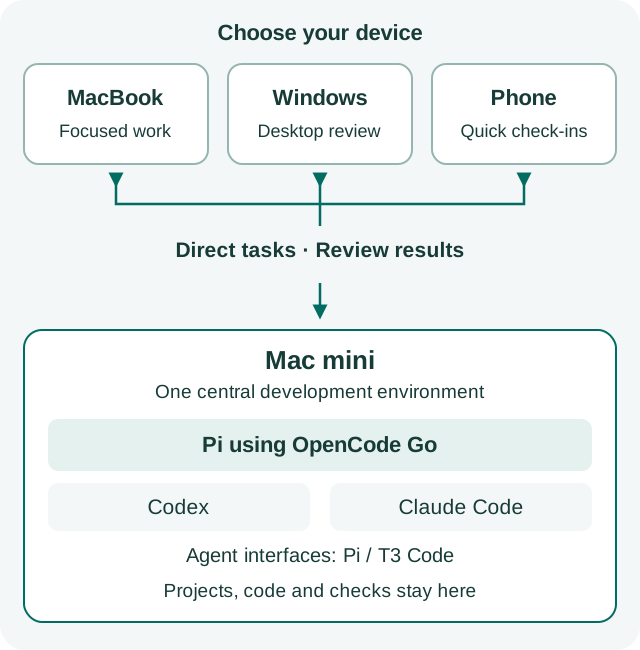
The concept is simple: keep your projects and AI coding agents on one central computer, and use whichever device is convenient to direct and review their work. The central computer does the development work. Your laptop, desktop or phone is the place where you interact with it.
A Mac mini is one example of that central computer. Your projects stay there while you move between a MacBook, a Windows computer and a phone. Each device gives you access to the same place where the work happens.
This separates the development environment from the device in your hands. You can change where you work without moving the project or maintaining a separate copy of the environment on every device.
AI agents make remote development practical
Coding agents can investigate a project, propose an approach, make changes and run checks on the central computer. You provide the goal and feedback, then review what they produce. This makes a short conversation useful even when you are away from your main screen.
The tools in this example are Pi using OpenCode Go, alongside Codex and Claude Code. T3 Code provides another interface for working with coding agents from different devices. The tools support the workflow; the project and the decisions remain its focus.
A clear task gives an agent room to work between your interactions. You can return to inspect progress, answer a question or adjust the direction, without needing to carry the development computer with you.
Choose the device for the moment
A MacBook is a comfortable place for focused development, detailed feedback and reviewing changes. A Windows computer offers another desk from which to work with projects kept on the Mac mini.
A phone is useful for shorter interactions: checking progress, asking a follow-up question or clarifying a task. Longer reviews are easier on a larger screen, where you can read the changes and their context together.
The shared project provides continuity as you move between devices. Conversations still belong to the tool you use, so moving to a different tool may require a short explanation of the goal and current progress.
From an idea to a reviewed change
Imagine a small website improvement. From your laptop, you describe the desired result and ask an agent to investigate the relevant part of the project. You review its proposal and give it a clear, limited task.
Later, you check progress from your phone and clarify a question. When you return to a larger screen, you review the changes, consider the checks and decide whether more work is needed.
The useful continuity comes from keeping the project, the task and the review clear. A short handoff should explain what was requested, what changed and what still needs attention.
Keep human judgment in the loop
Convenient access does not remove the need to review AI-generated work. Keep tasks focused, read the changes and ask for evidence that the result behaves as intended.
A second agent can offer another perspective, but agreement between agents is not a guarantee. You remain responsible for deciding whether the work is ready to publish.
The central computer needs to be available, and detailed review still takes time and attention. With those limits understood, this approach gives you more freedom to choose where and how to participate in development.